The days are getting shorter now and temperatures slowly dropping, with an awful lot of rain around. So it’s time to lift the last of various crops and clear the raised beds for winter.
This week it was carrots, beetroot and dwarf French beans up for harvest. Those three were all in one large bed and are a good mix in terms of companion planting.
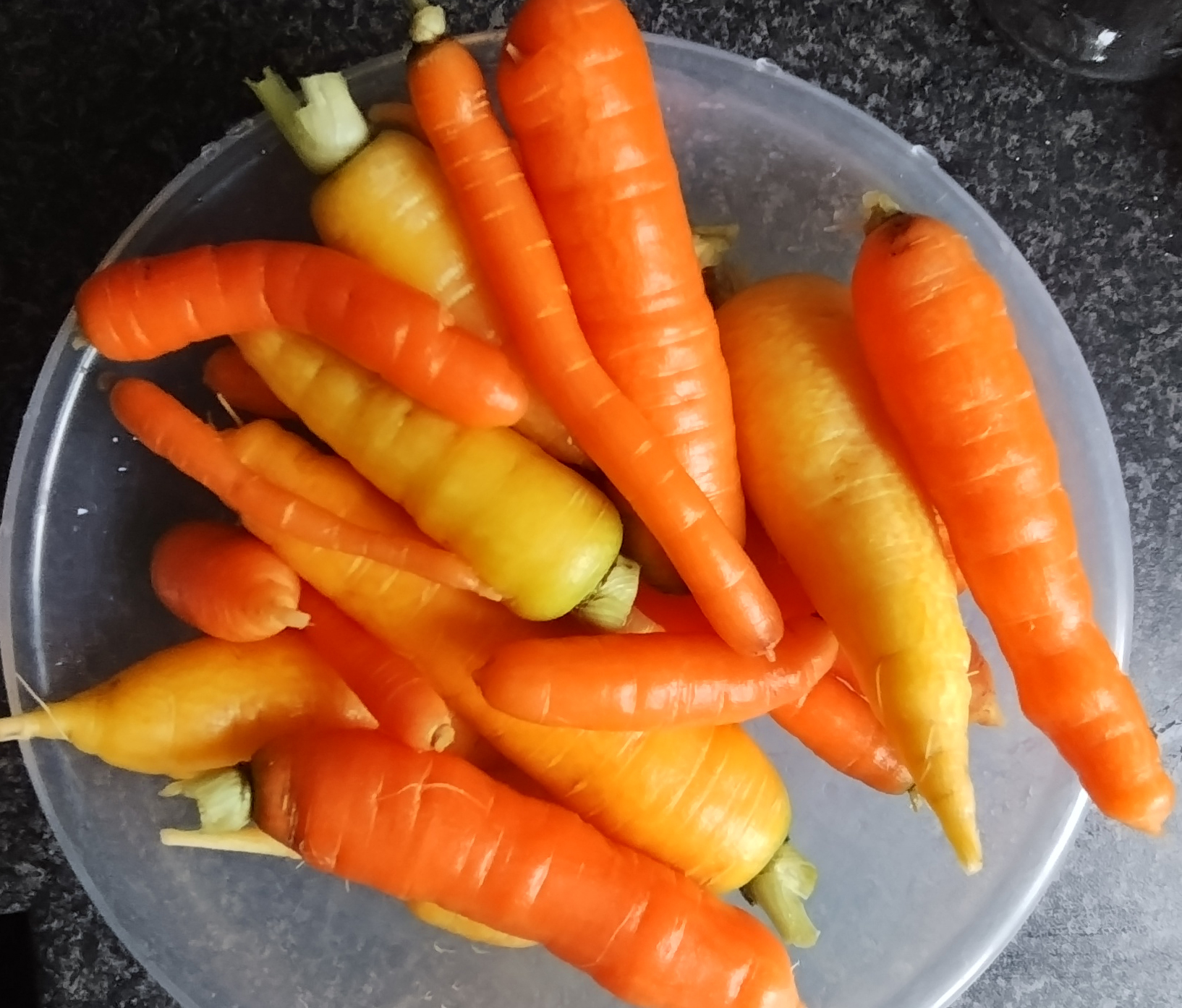
The carrots were a seed tape mix from Suttons, containing Amsterdam Forcing, Early Nantes and St. Valery. That means some came up orange and others yellow; some large and some small and I quite like that mix. There’s still about half a row left in the ground, which I’ll lift in the next few weeks before they start getting nibbled by creatures.
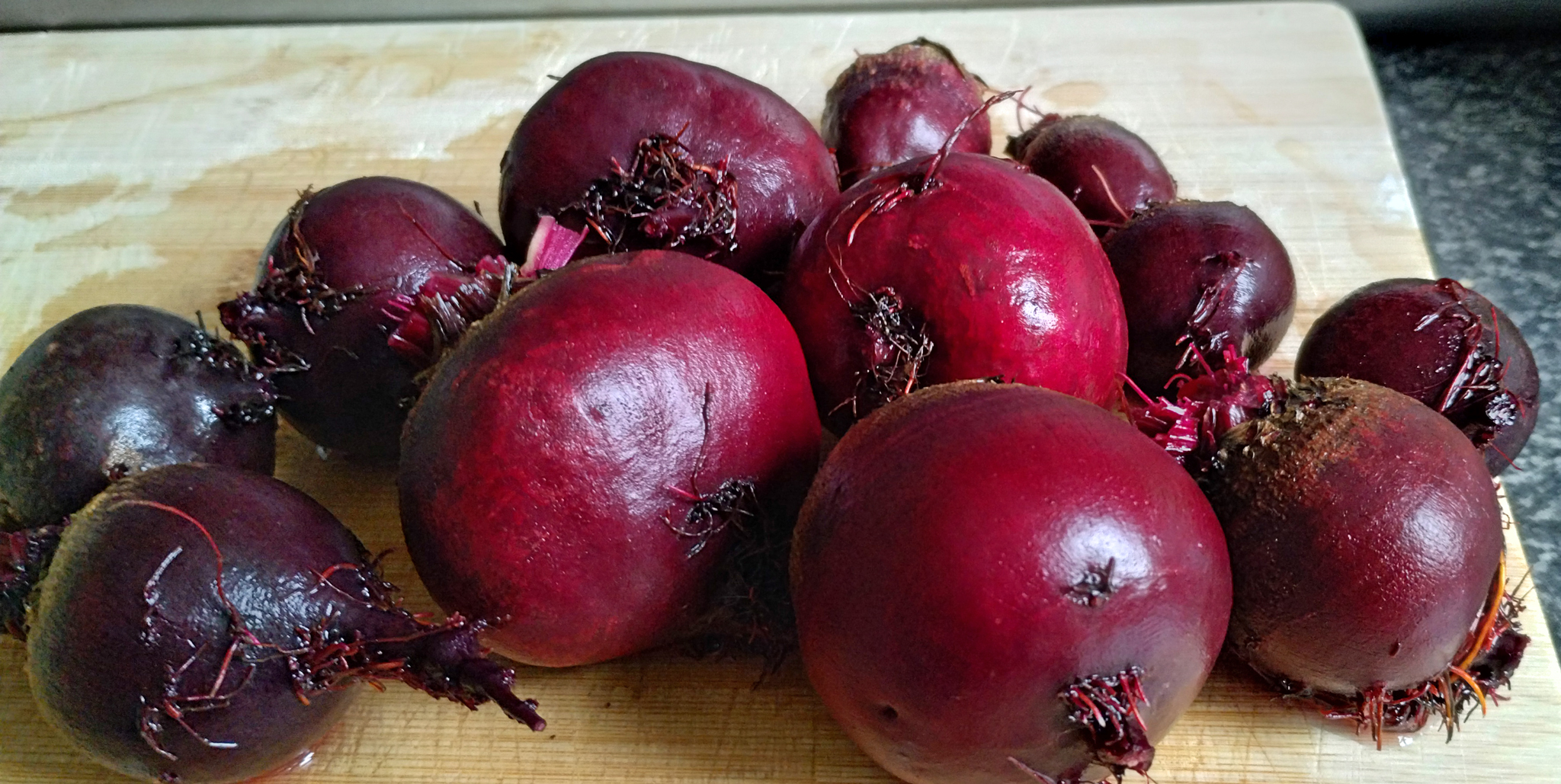
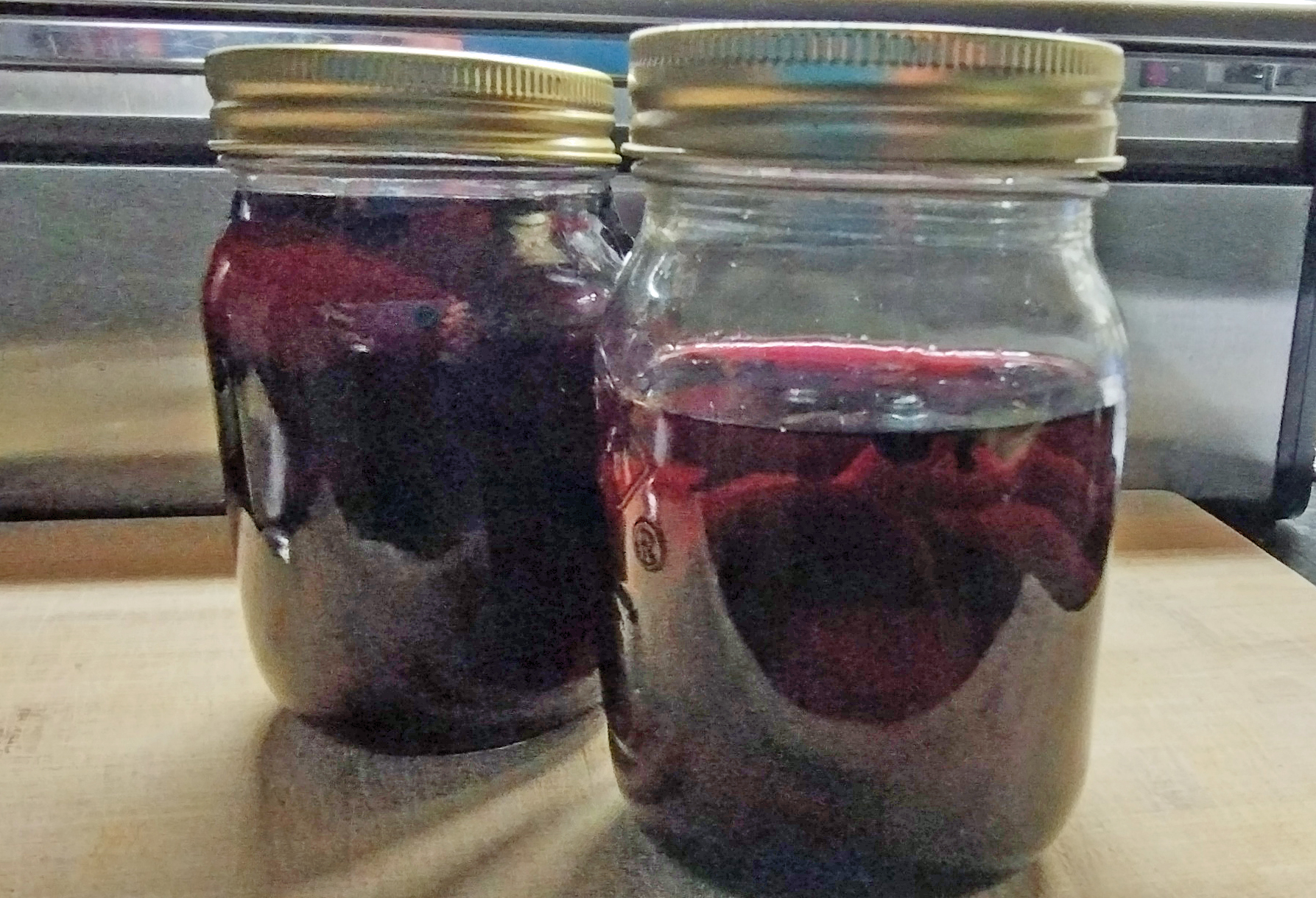
Next to them, I lifted the last of the Boltardy beetroot. These were all in good shape, but in various sizes. Cleaning both those and the carrots up, I halved the carrots into the best shape for roasting later and froze them. Then baked and pickled the beetroot. As usual, peeling and slicing the beetroot had the kitchen looking like a murder scene.
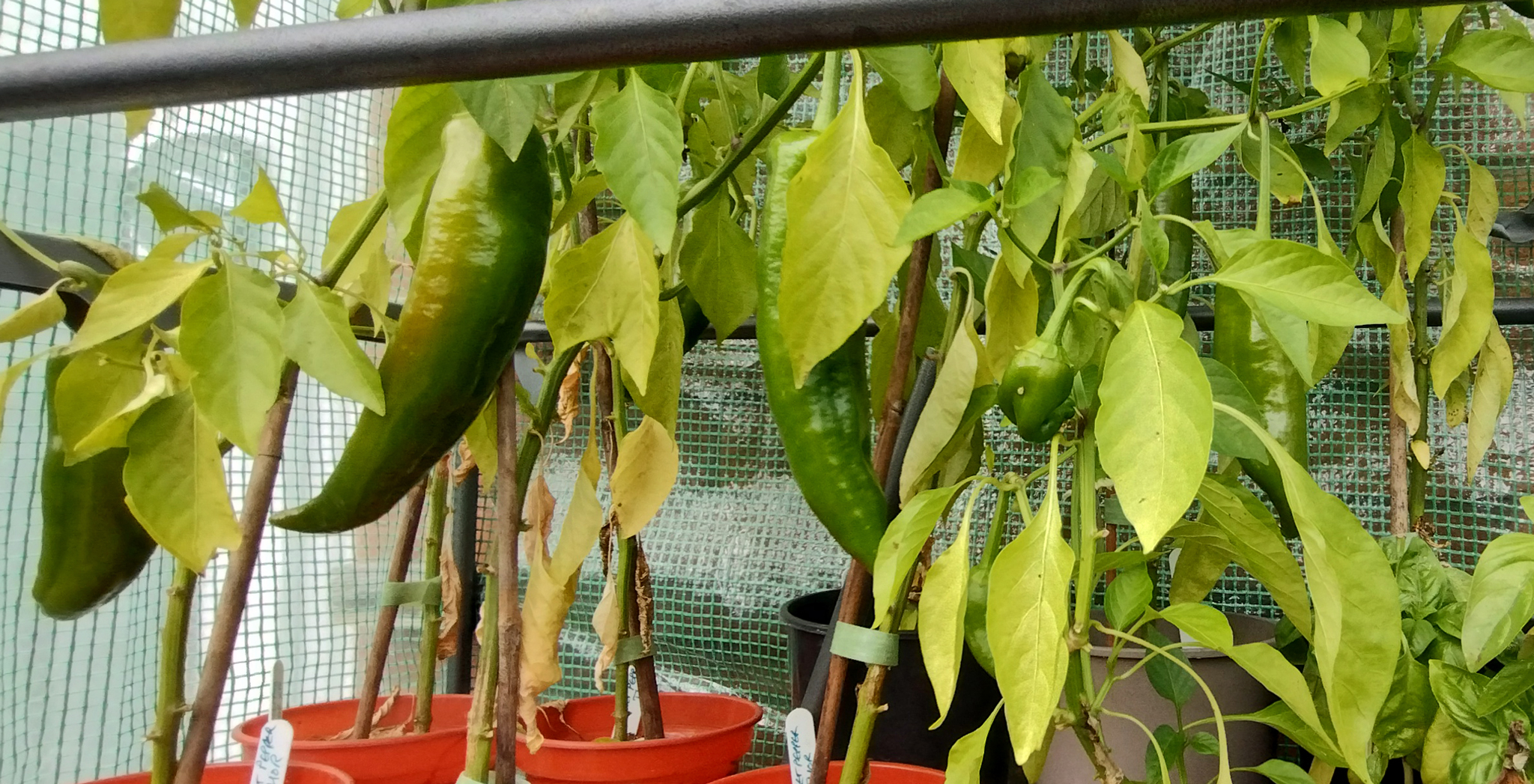
I do wish the peppers and chillis outside in the tents were a little more advanced. They’re largely fully grown but are struggling to ripen in these darker days. There are plenty of horn-style sweet peppers a good 6 – 8 inches long but they’re still green. If all else fails they can still be tasty used green but would lack that delicious sweetness of a good red pepper. A few sunny days would come in handy this month.
Meanwhile there’s a real problem here with chickweed, which if left unchecked would overtake all the vegetable plants. Despite me scraping it all out every few weeks it comes back. Even over winter it’s capable of running wild.
To prevent that I’m not really tempted by using green manure. I did that once before with a strong nitrogen fixing variety (as opposed to the fairly pointless non-nitrogen fixers which you just chop into the soil to provide a bit of organic material) but it left the bed concerned with masses of stringy roots that made it undiggable for several years. Instead I’m covering empty beds with weed- and light-proof membrane for the winter. That’s done the trick nicely for the past couple of years and a timely top-up of fertiliser will set up that nutrition that next year’s plants will be looking for.
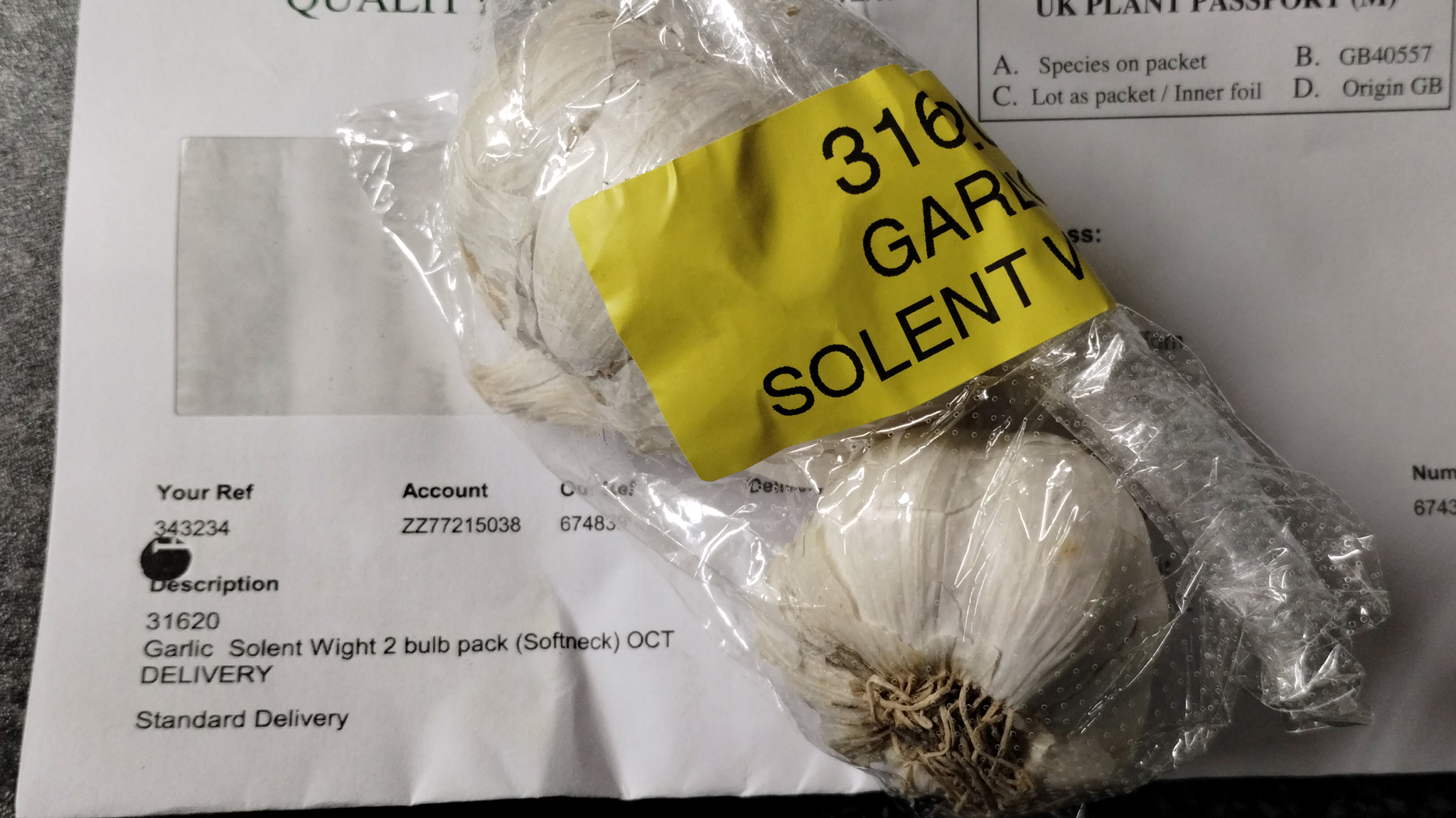
One of the beds will remain open to the air to house next year’s garlic. This time I’m going with reliable softneck variety Solent Wight, mostly because it’s said to keep its flavour well when cooked, which some others definitely don’t. I got two bulbs from Kings Seeds and will break them up and plant out the cloves this coming weekend. They’ll be far happier out in the winter cold than I will!
 www.grow-veg.uk