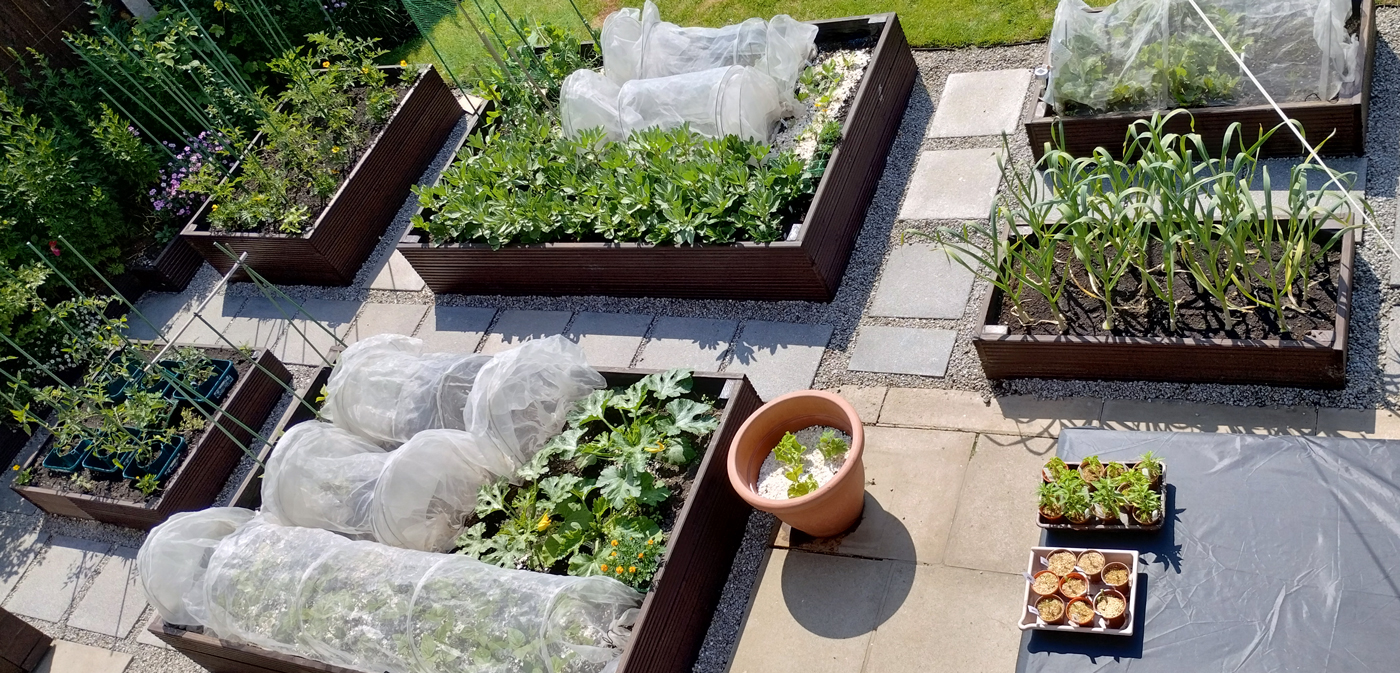
It’s a pleasure this week to see the first courgettes appearing. They’re the Midnight variety, which has smaller, bushy plants, without the pesky spines when handling. I grew three plants from seed and they’re really filling out now, with bright yellow flowers followed by dark green fruit.

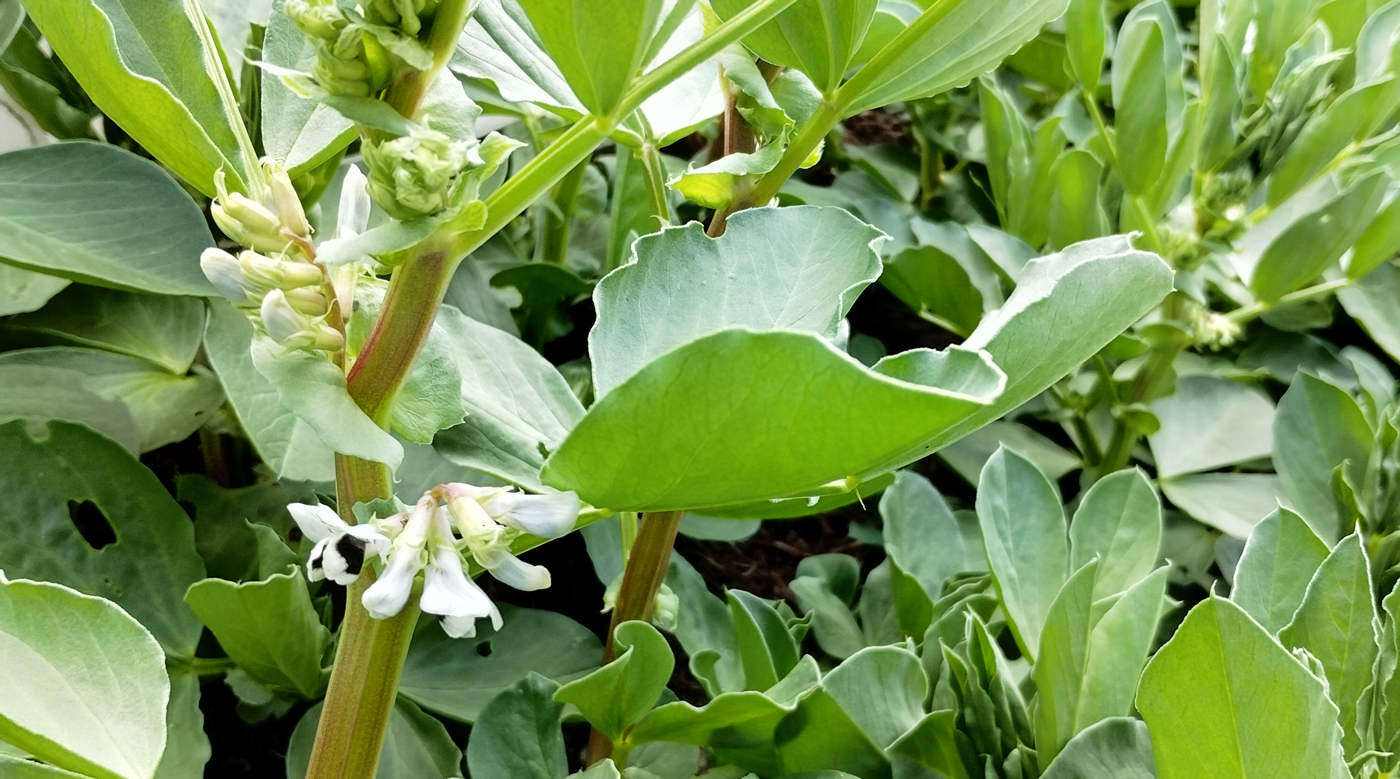
They should soon be followed by the first broad bean pods. I always grow the Sutton variety, as a great combination of compact plant form, with tasty beans. Today there are the first white and black flowers, so I’ve taken the fleece covers off them to give access to pollinating bees. That said, there’ve been a lot of ants around in this hot weather so I’ll be careful to watch out for them doing the blackfly farming thing on the tips of the bean plants.

There are the first flowers too on the tomato plants – three varieties this year: Roma for sauce making and Gardener’s Delight and Tomatoberry for eating as is. Nearby, there are lots of edible purple flowers on the garlic chives.
The latter are like a magnet to bees, as are the sage flowers which are behind them in the herb bed. This is all good for drawing the precious bees into the garden to do their vital pollinating.
Left, chive flowers with sage flowers behind them.
Meanwhile in one of the tents there are chillies growing: both Apache (about 80,000 Scoville) and Scotch Bonnet (up to 300,000 Scoville). The plan is to use the Apaches in cooking and the Scotch Bonnets to make chilli powder.
After germinating them from seed and seeing them start to grow well in small pots, I noticed recently that their growth seems to have slowed down, with only limited progress over the past couple of months:
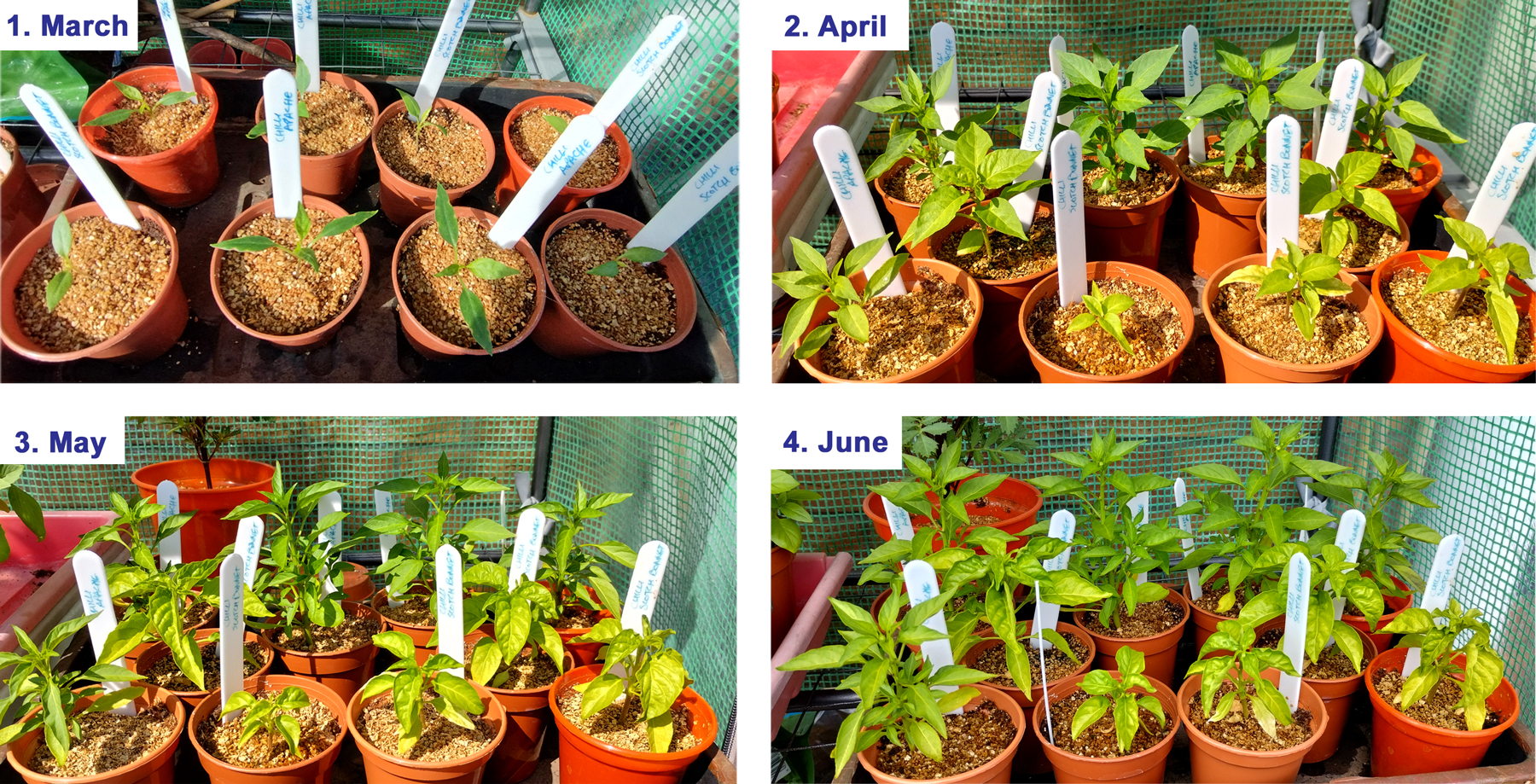
I can see a fair few roots underneath the Apache pots, so they probably just need moving into larger pots with fresh compost, which I’ll do this week. But the Scotch Bonnets don’t appear to be full of roots at all. I know the hottest varieties can be slower growing – especially here in the UK, albeit that we’ve had a hot spring season – so I’ll just concentrate on careful feeding and keeping them as warm as possible.
Likewise, a couple of other crops have been erratic to say the least. For the life of me I don’t seem to be able to grow spring onions this year. A couple of small rows of directly sown White Lisbon seeds have produced the grand quantity of four spring onions.
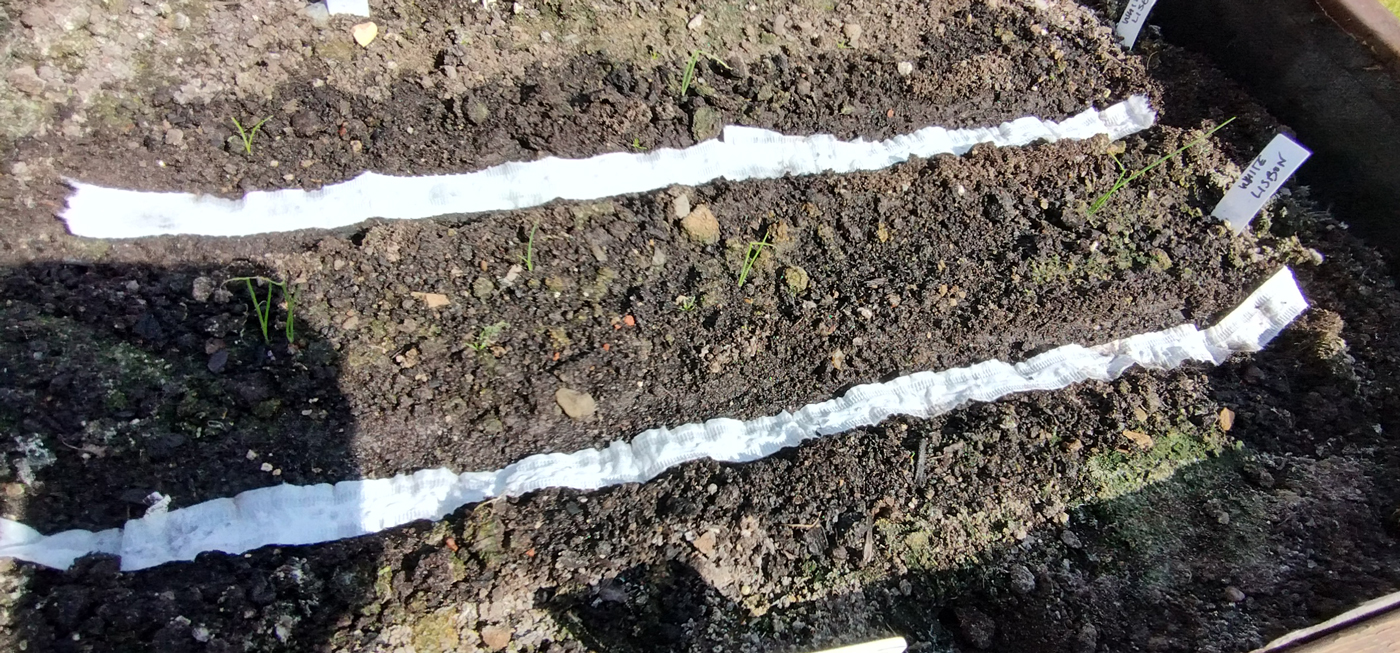
I did a follow-up sowing of White Lisbon seed tape and, again, nothing. So I sowed a load more in the heated propagators and, again, nothing. None of the seeds were out of date, so it’s got me baffled.
And in another of the raised beds, four long rows of carrot seeds have only partly grown. It’s not random; there’s a clear visible line where the successful seedlings stop. That suggests some contamination of the soil in the barren areas, but I don’t know what that could be. Things grew fine there last year, after I’d just built the new beds. I’ve sowed a lot of carrot seeds in the propagators which will be ready to plant out in that same bed soon. Hopefully they’ll grow well, but if not I’ll have to do some scientific testing of that area of the soil.
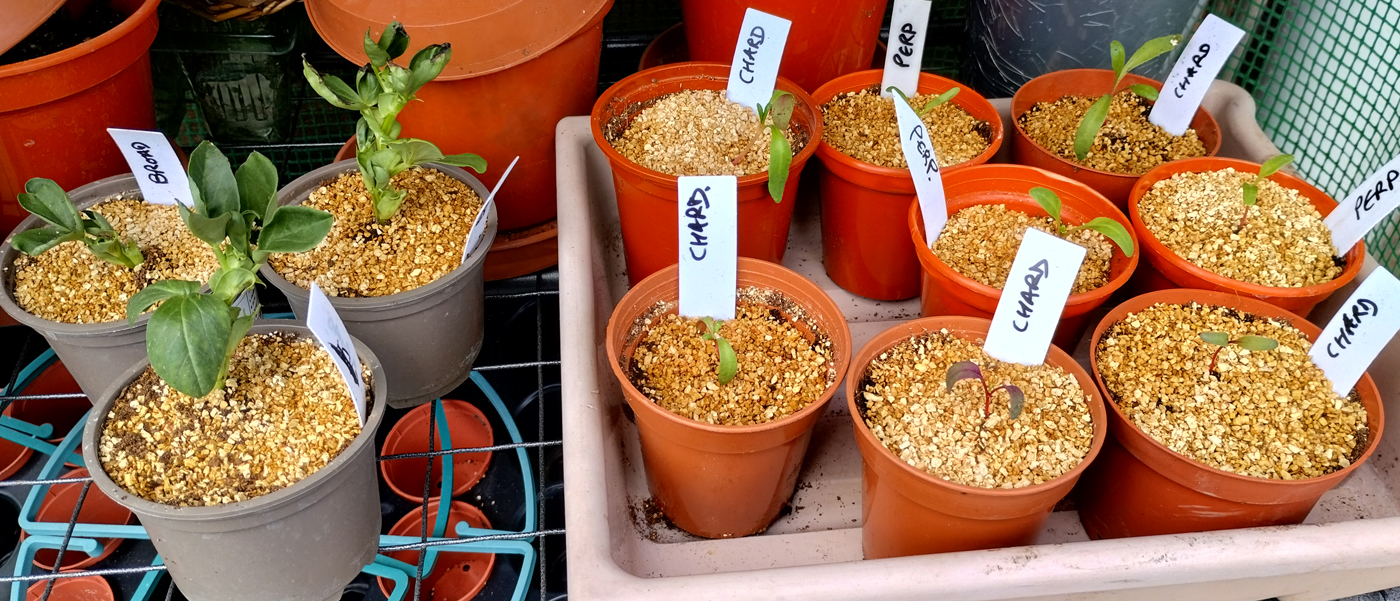
The same goes for the other large bed, where sowings of swiss chard and perpetual spinach have failed. Their replacements are growing in pots in one of the tents, so I’ll plant those out once big enough and hope for the best.
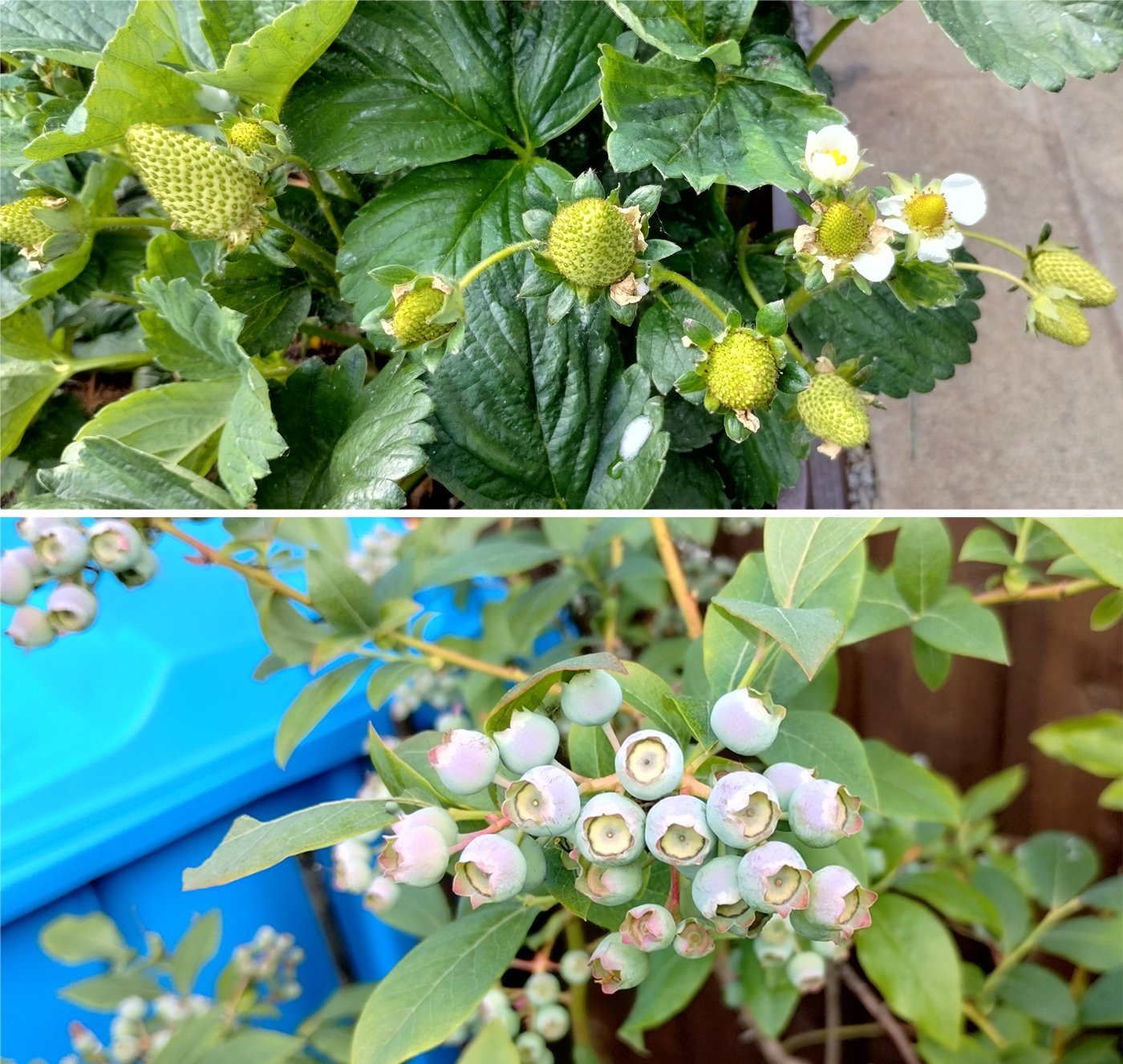
On a brighter note, over in the fruit beds there are lots of strawberries growing, which just need to take on their red colour. And alongside them are a variety of blackberries, blueberries and pink blueberries. The blackberry plants in particular are very prolific, which – going by the price of blueberries in the shops – is a very good thing.
As things are growing I’m taking off the protective tunnels I always start with and this year am trying a whelk shells product as a slug deterrent. This has received good reviews so I’ve put it around vulnerable plants like the iceberg lettuces.
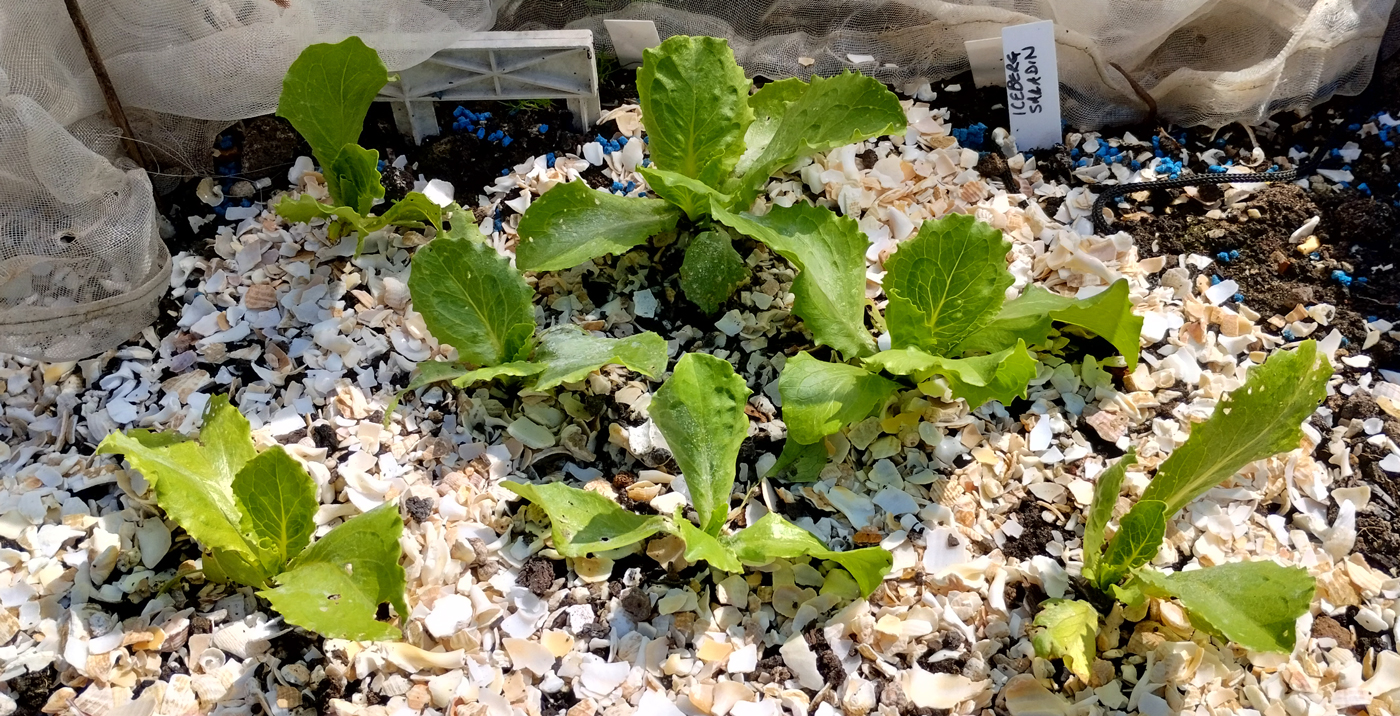
The only downside is that watering tends to cover the shells in soil, but it’s just a question of dealing with it. Hopefully that means I’ll eat more lettuces this year than the slugs do!
 www.grow-veg.uk