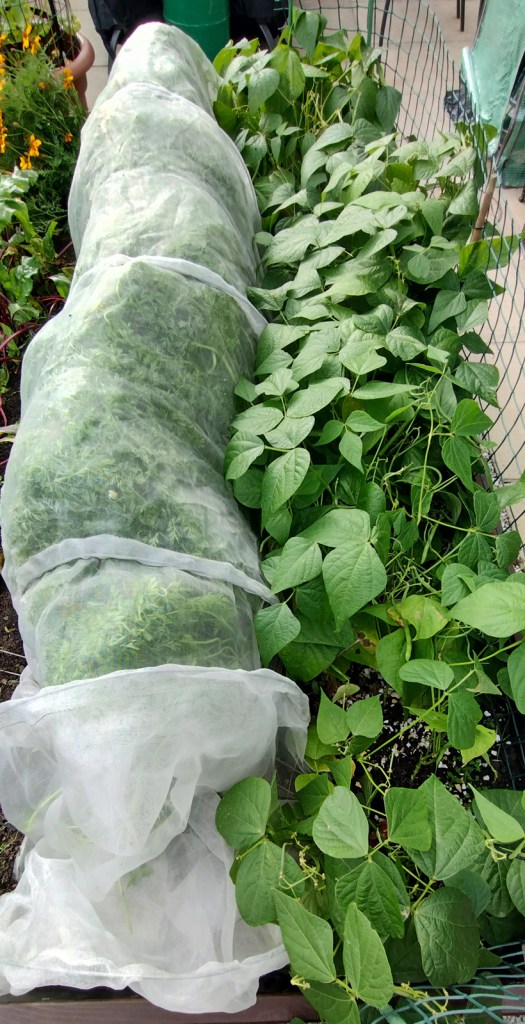
For many years I’ve sworn by mesh tunnels to protect growing crops from pests. This is especially important with things like carrots and cabbages, both of which are susceptible to particular invaders.
Cabbages and other brassicas can be decimated if cabbage white butterflies lay eggs beneath the plants. I’ve lost whole crops to the resultant caterpillars in the past.
Carrots meanwhile are always targeted by carrot root fly. Unlike white butterflies, you rarely notice carrot flies but if they get into the soil their offspring will ruin your carrots: blackened with lots of areas eaten away.
The photo shows my carrots this week, growing under one of the protective tunnels I use. These are strong but a very fine mesh, so pretty much nothing can get through.
As a result I was able to lift a nice harvest of carrots yesterday.
These started as a seed tape from Suttons, containing a mix of Amsterdam Forcing 3, Early Nantes 5 and St. Valery. That means some are orange and others yellow, as well as being different shapes and sizes.
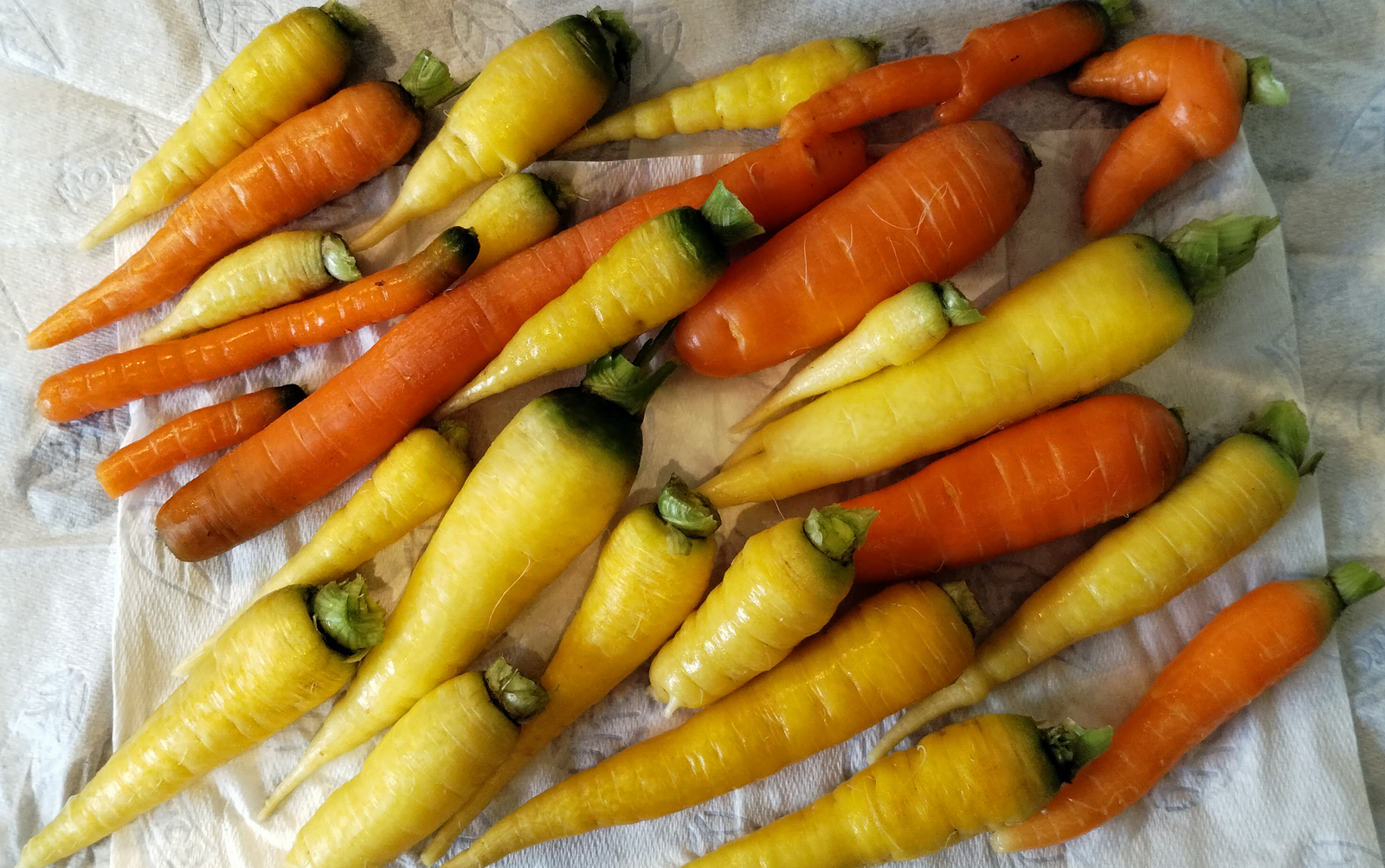
To be honest they’re not as impressive as when I’ve grown varieties like Sugarsnax and Maestro. But I needed a quick and easy start this year, after building new raised beds, so the tape met that need. Next time I’ll sow loose seeds, as normal.
Alongside the carrots in that bed are a couple of dozen dwarf french bean plants, of the variety Castandel. These always do well and I picked a good bunch this weekend.
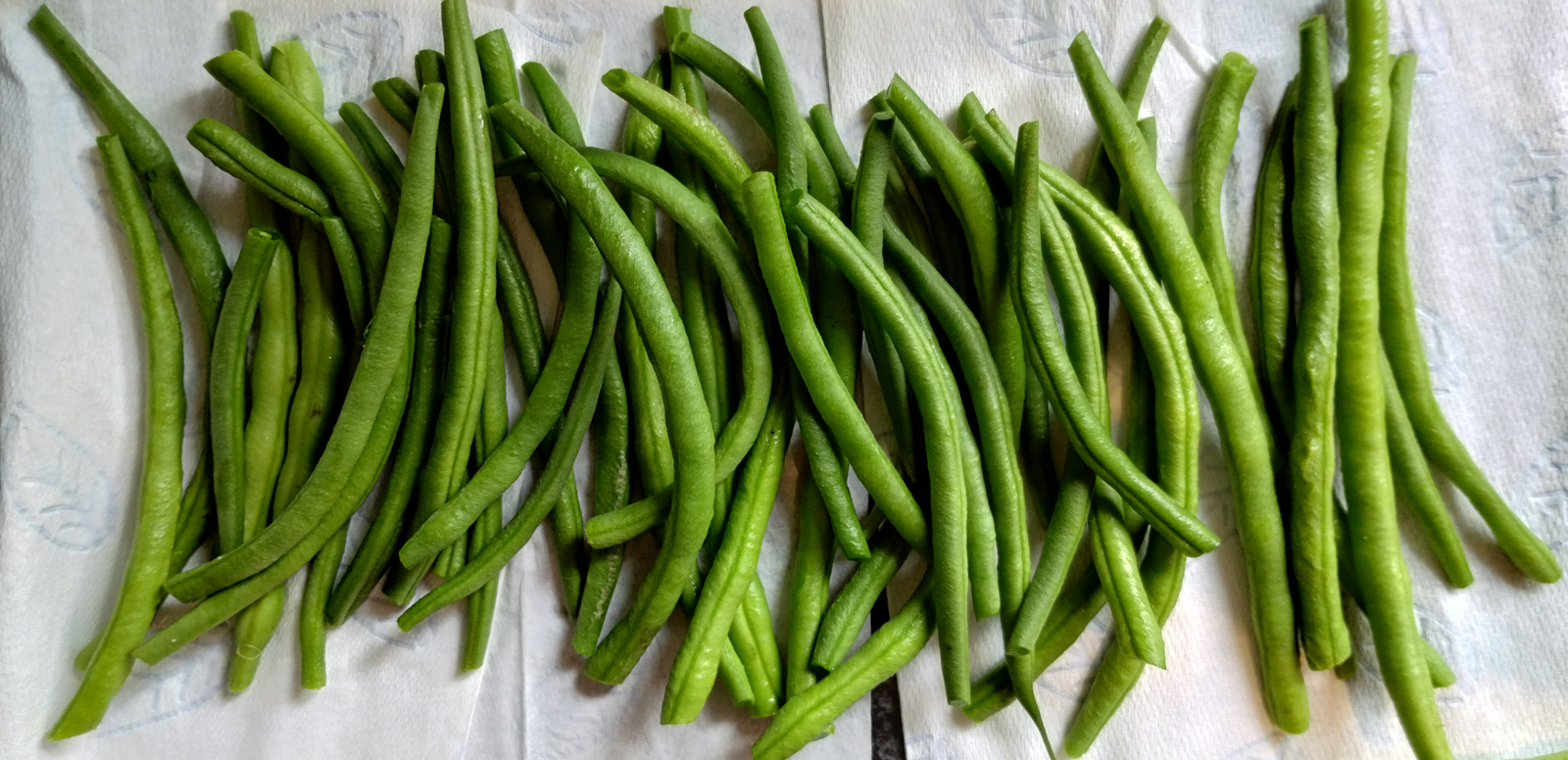
A few had grown beyond the ideal size and had started forming seeds/pulses inside. They’d be a bit tough and stringy if cooked, so out of curiosity I split one open and tried munching the seeds.
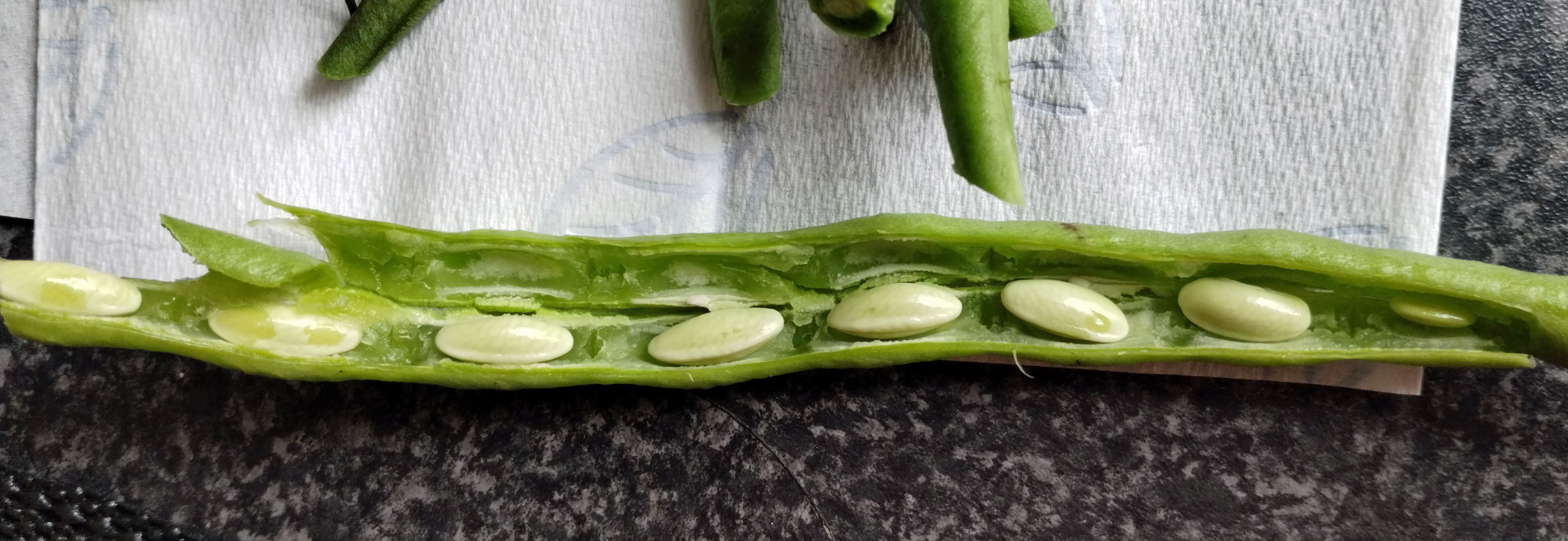
They were delicious! Although raw they were soft and tasted very nutty, a bit like unsalted peanuts. It’d take some skilful timing to regularly harvest a good amount in that state but it’s great to know there’s potentially a nice treat available for the grower during a picking session.
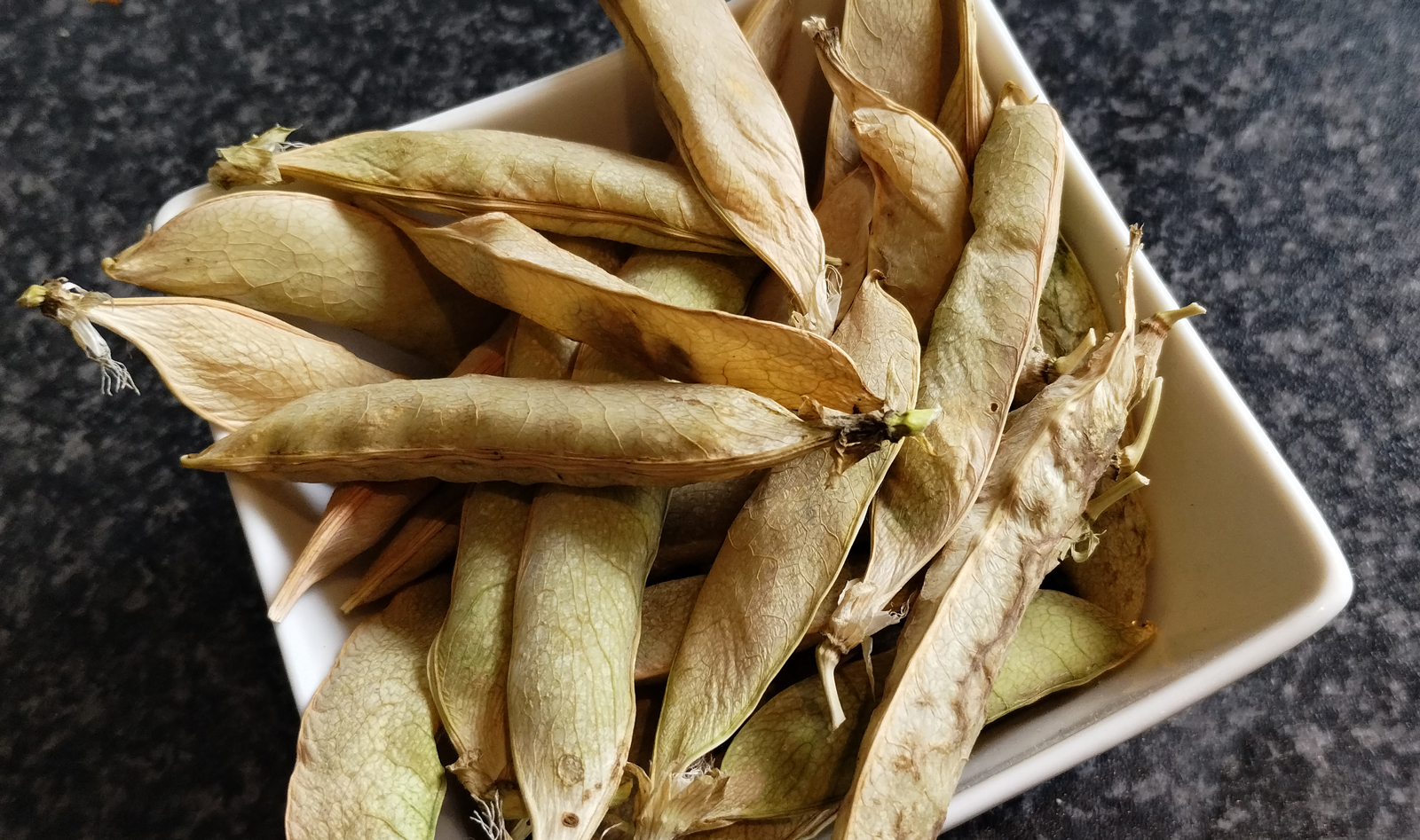
It’s always an option to let the pods grow to the point of being dry and crisp, then pop out the hard seeds either to cook or to sow for new plants next year. I’ve done that with the pea and mangetout plants, so have a nice stock of pea seeds ready to go in the ground next spring.
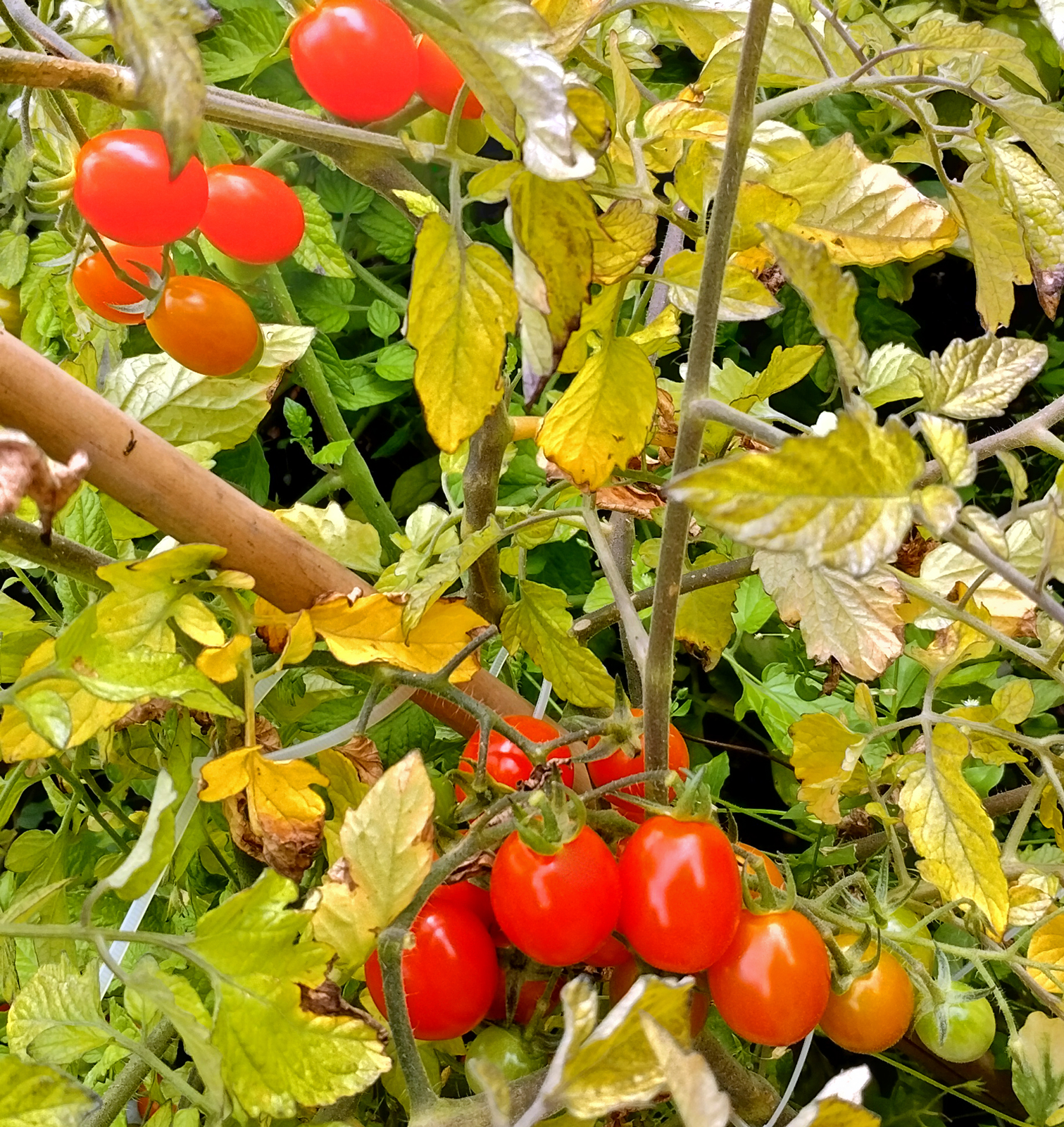
Meanwhile the tomatoes are finally turning red and I’m getting a good handful every day for lunch, etc. With just three varieties on the go this year – Crimson Plum, Aviditas and Tomatoberry – it’s easy to monitor the consistency and the ripening is nicely staggered across the varieties.
I just need the chilli and sweet peppers to start picking up some colour now; they’re all still green and some have a fair bit of growing still to do. With the weather getting cooler now and less sunshine, they’ll need all the warmth and protection that the plastic greenhouses can offer them.
Best Wishes till next time.
 www.grow-veg.uk
They are looking good, Bill!
LikeLiked by 1 person
Thank you!
LikeLike