I’m growing three varieties of tomato this year, a mix of indeterminate cordon varieties (Gardener’s Delight and Tomatoberry) and a determinate bush variety, Roma. When sinking the young plants into the raised beds back in April, I diligently put a plastic plant label at the foot of each one saying the variety. Wind forward two months and today there’s so much growth (along with some supportive marigolds around the edge) that the labels are no longer visible without digging around on your knees, David Attenborough-style.
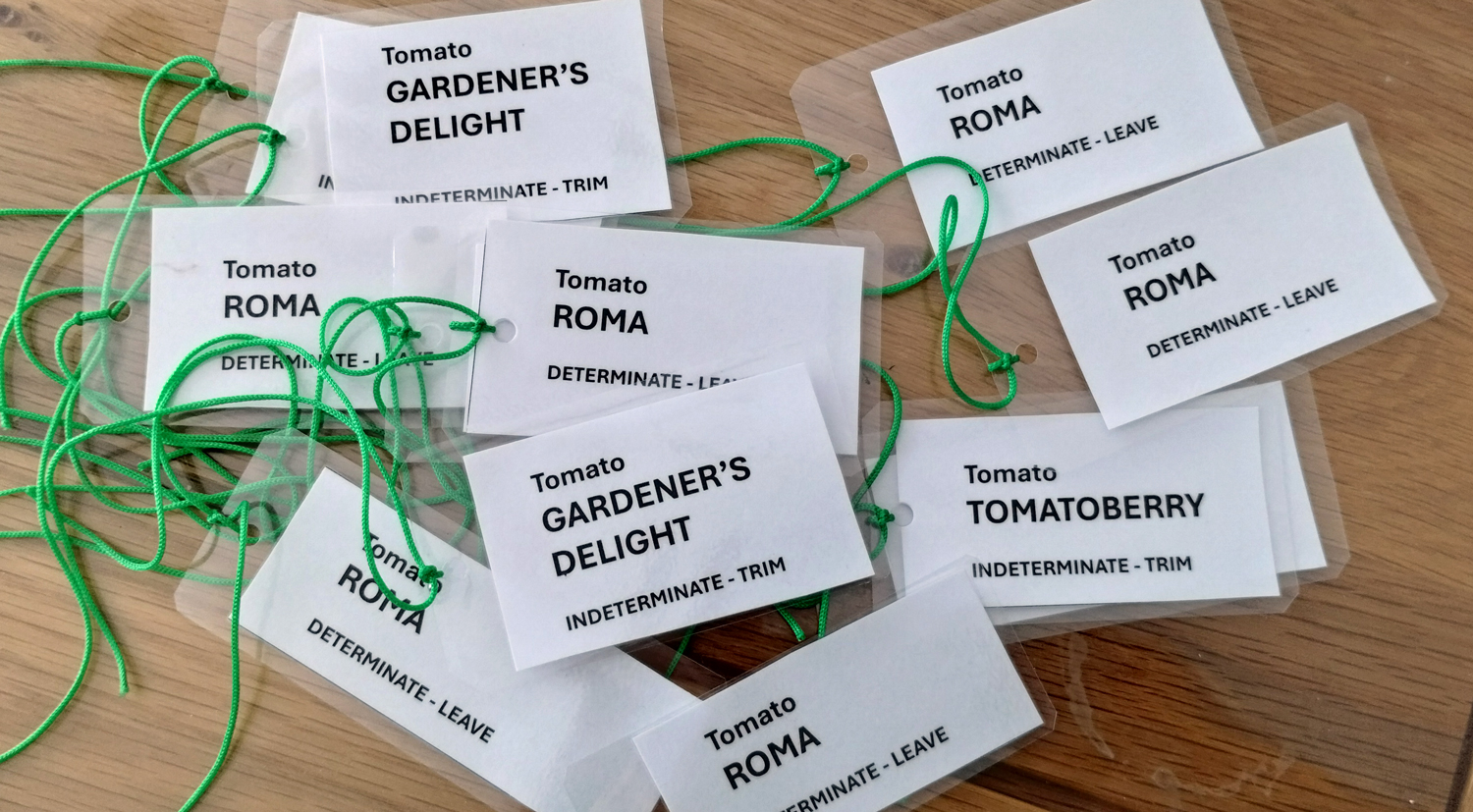
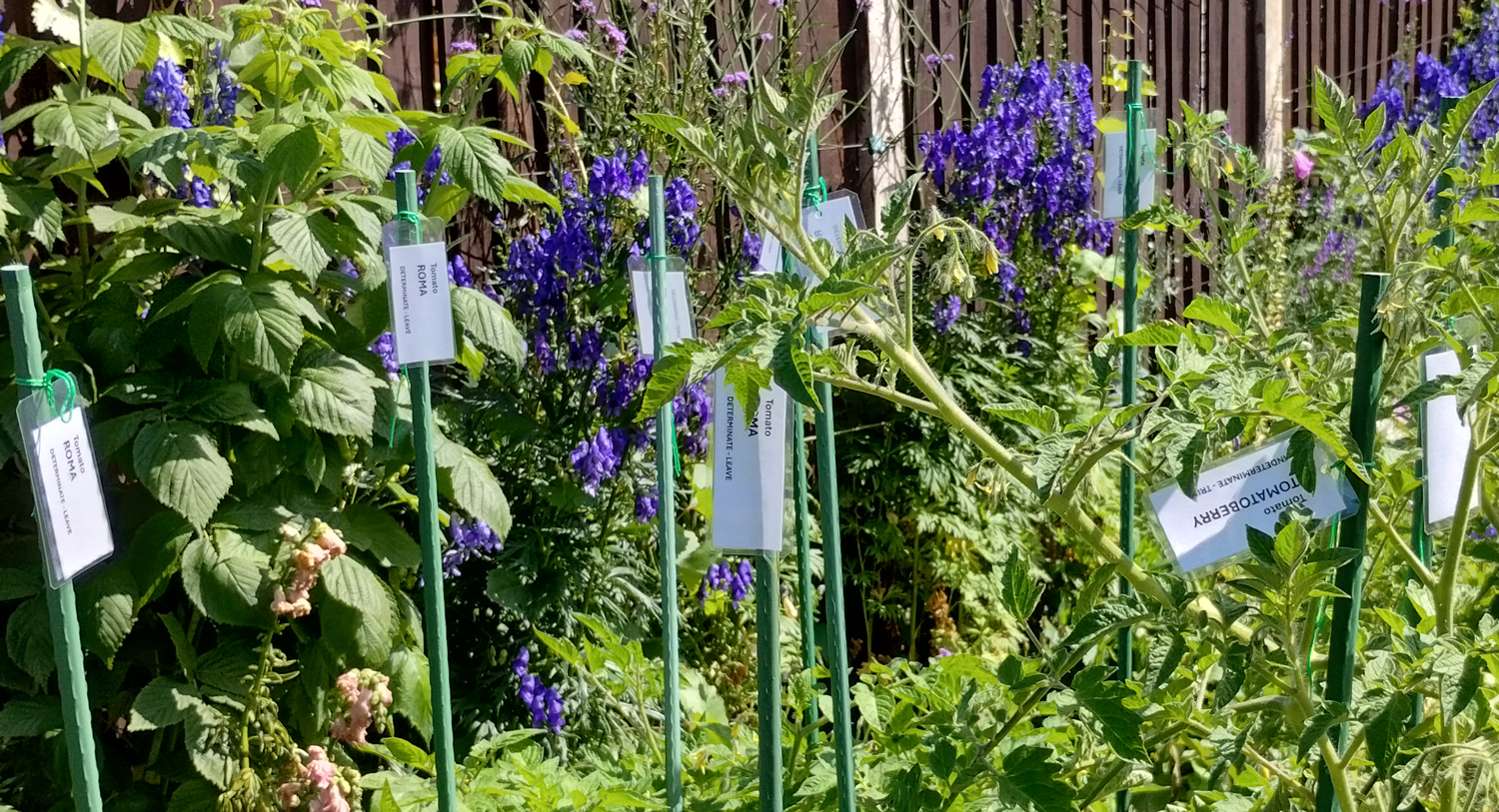
So, equipped with laminating machine and some green builder’s line I made these labels. The point is to remind me which are the indeterminate ones, i.e. which need the side elbow shoots regularly picking out. Having these labels at the top of each plant’s cane makes it a lot easier. The determinate Roma, meanwhile, can be left to their own devices.
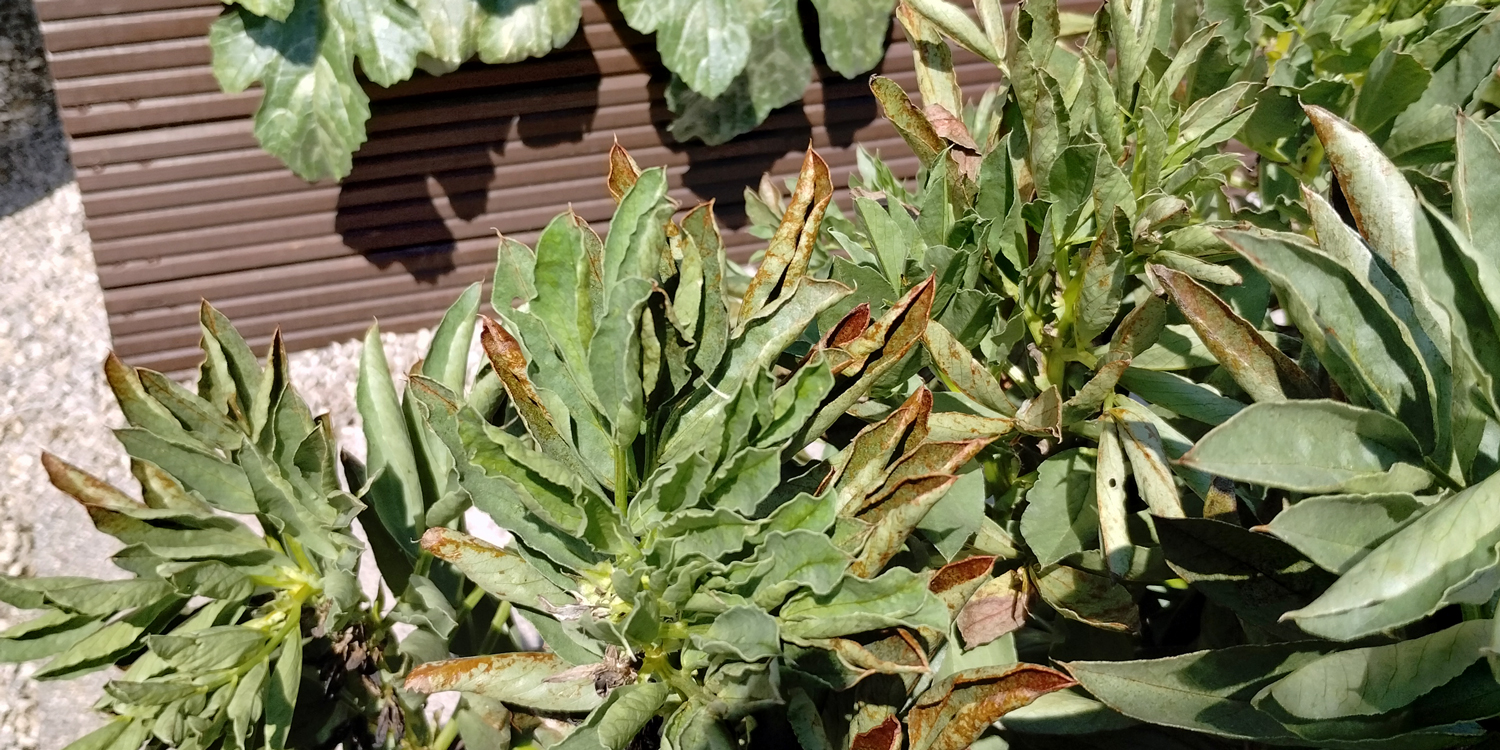
Nearby, the broad bean plants have suffered chocolate spot outbreak far earlier than usual. It’s a nuisance as there’s no biological fix, other than to space the plants more widely to improve air flow. It’s troubling because the affliction spreads from the leaves to the pods themselves and can destroy whole plants.
I’m therefore having to pick the pods earlier than usual and once shelled the beans are quite small. It’s a shame, but I’ll just need to grow in one of the other beds next year, more widely spaced, on the assumption the disease will still be in the soil.
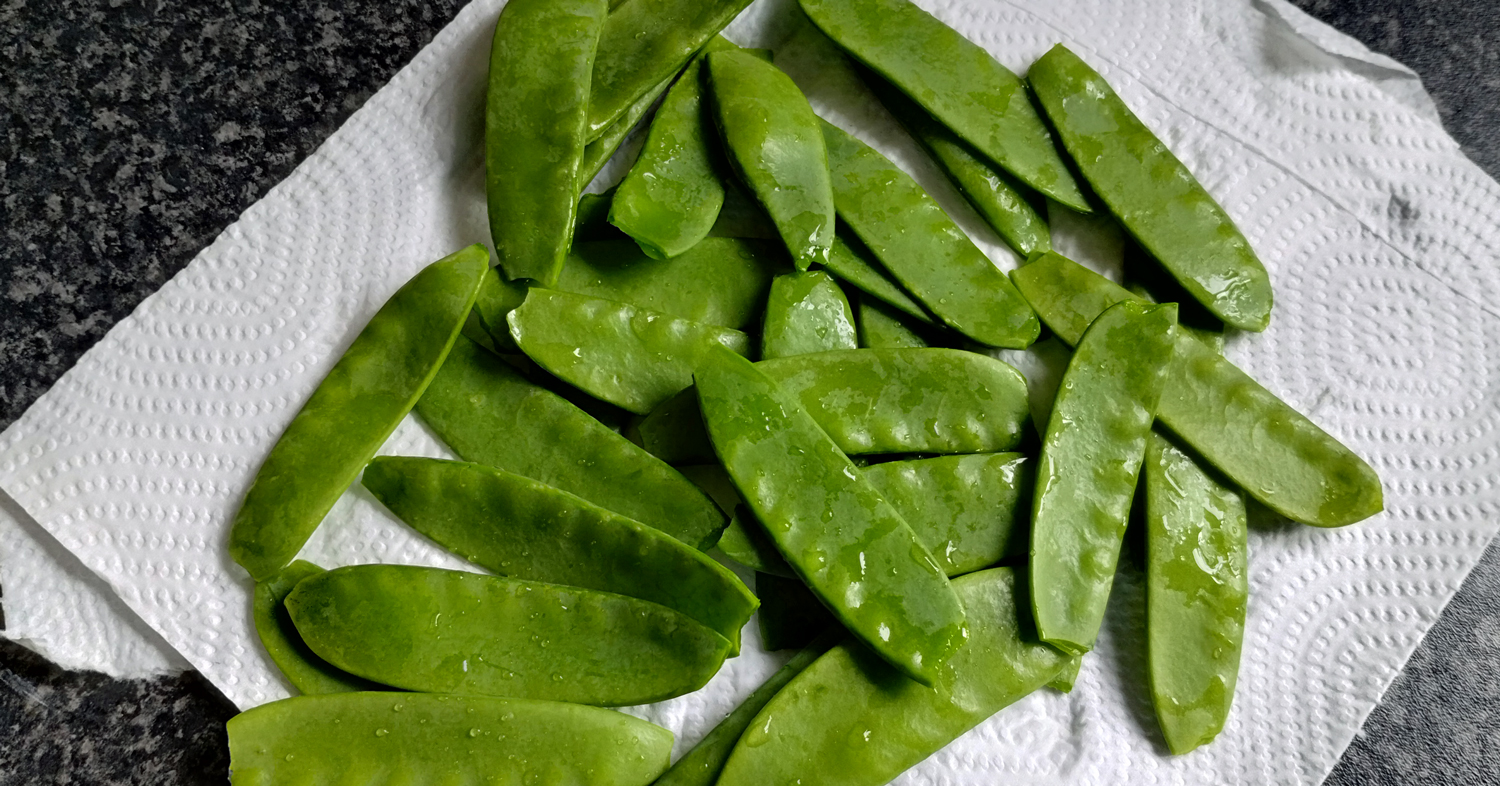
In happy contrast, I don’t know how long their season will last – in theory they should be producing into the autumn – but for now the mangetout plants are incredibly prolific. I’m picking what would be a £1.50 supermarket pack of pods every day. That’s from six plants, half of them Sweet Horizon and the others Snow Wind. Happily, they freeze well.
Likewise the three courgette plants are very (almost too) productive. Courgette on toast anyone? Care for some courgette tea? They’re the Midnight variety and make uniform, dark green courgettes with the plant itself being reasonably contained and not spreading too wide. The short-lived yellow flowers cry out to be used like they are in restaurants: stuffed with soft cheese, battered and deep fried, but I’m on a diet and don’t need the hassle of dealing with a deep pan of frying oil. Maybe an air fryer beckons ..
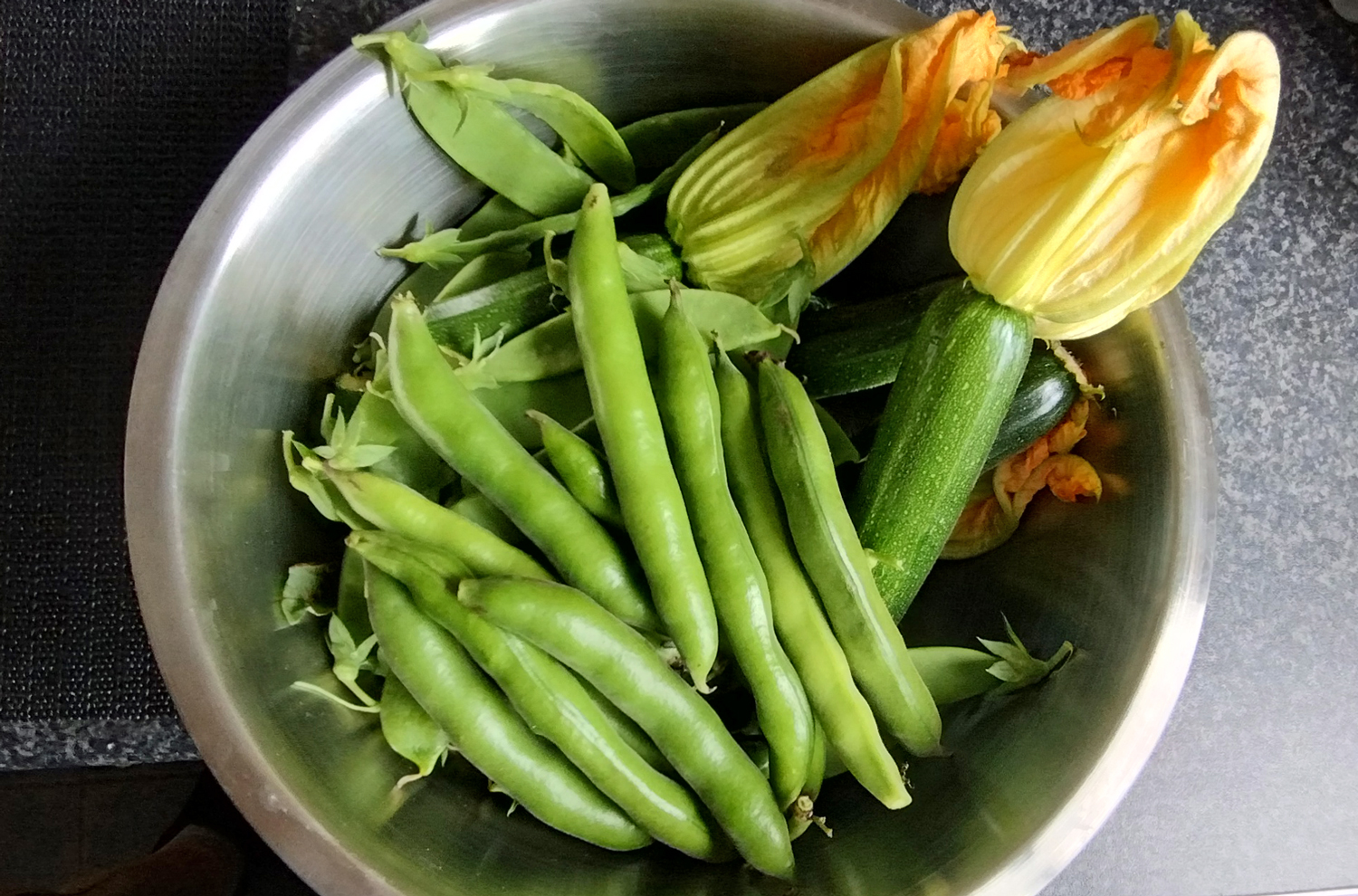
Alongside, there are early pickings now available from the Castandel French bean plants and not far behind are half a dozen Borlotti bean plants, now showing their first small pods. I’m looking forward to those delicious creamy borlottis as much as anything else.
In one of the smaller beds, the garlic is now falling over and yellowing, so I’ll lift it any day now and set it out to dry. Whenever I buy heat-treated garlic heads for planting, there’ll always be big cloves and small ones, so one tries to use the biggest and best, but there’ll always end up some small ones in the ground too.
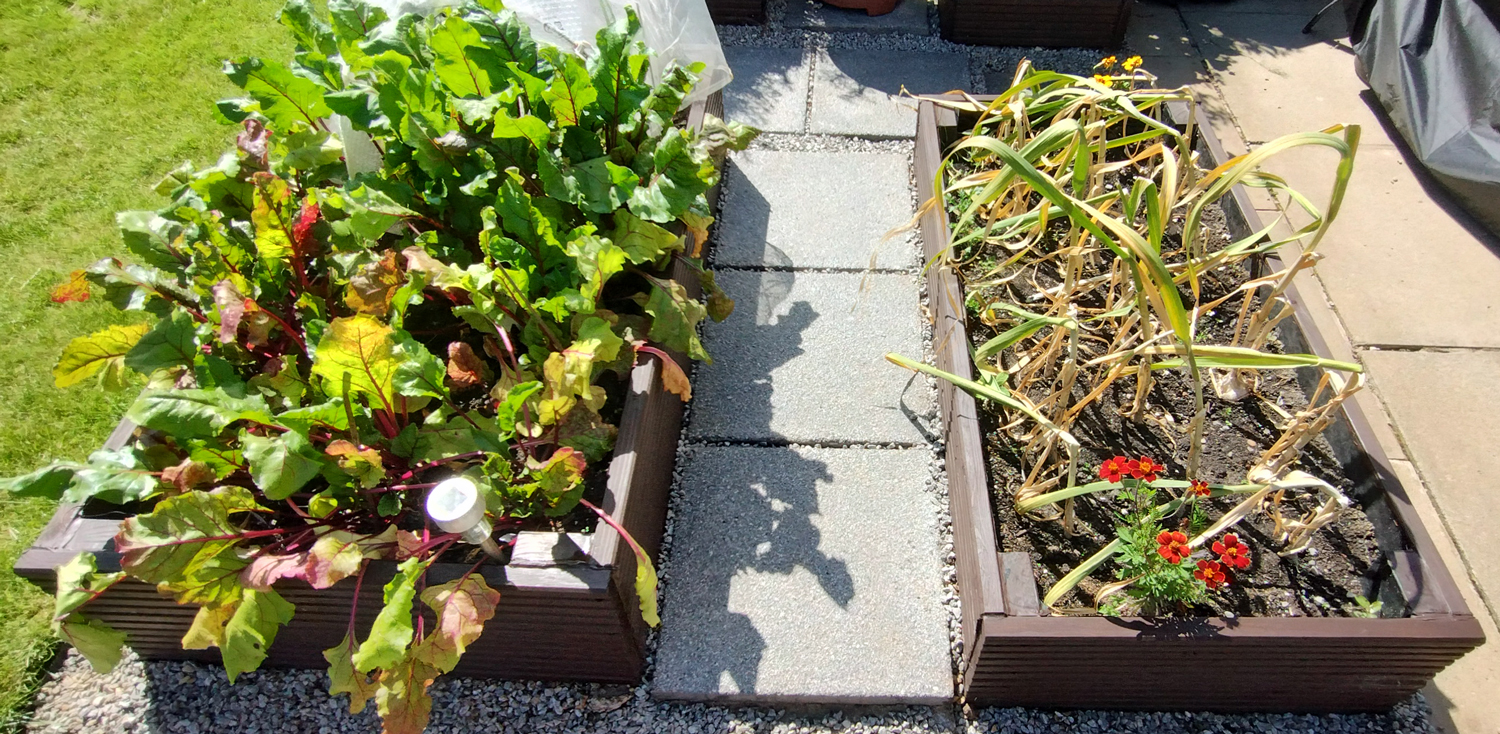
That actually seems to show through come harvesting time: just peeking through the ground are several really big heads of garlic, but alongside some don’t appear to have much body at all. No doubt they were the small, end of the bag cloves that went in back in October last year. Maybe the answer is to double up my order and not plant any small ones. They can always be eaten as they are.
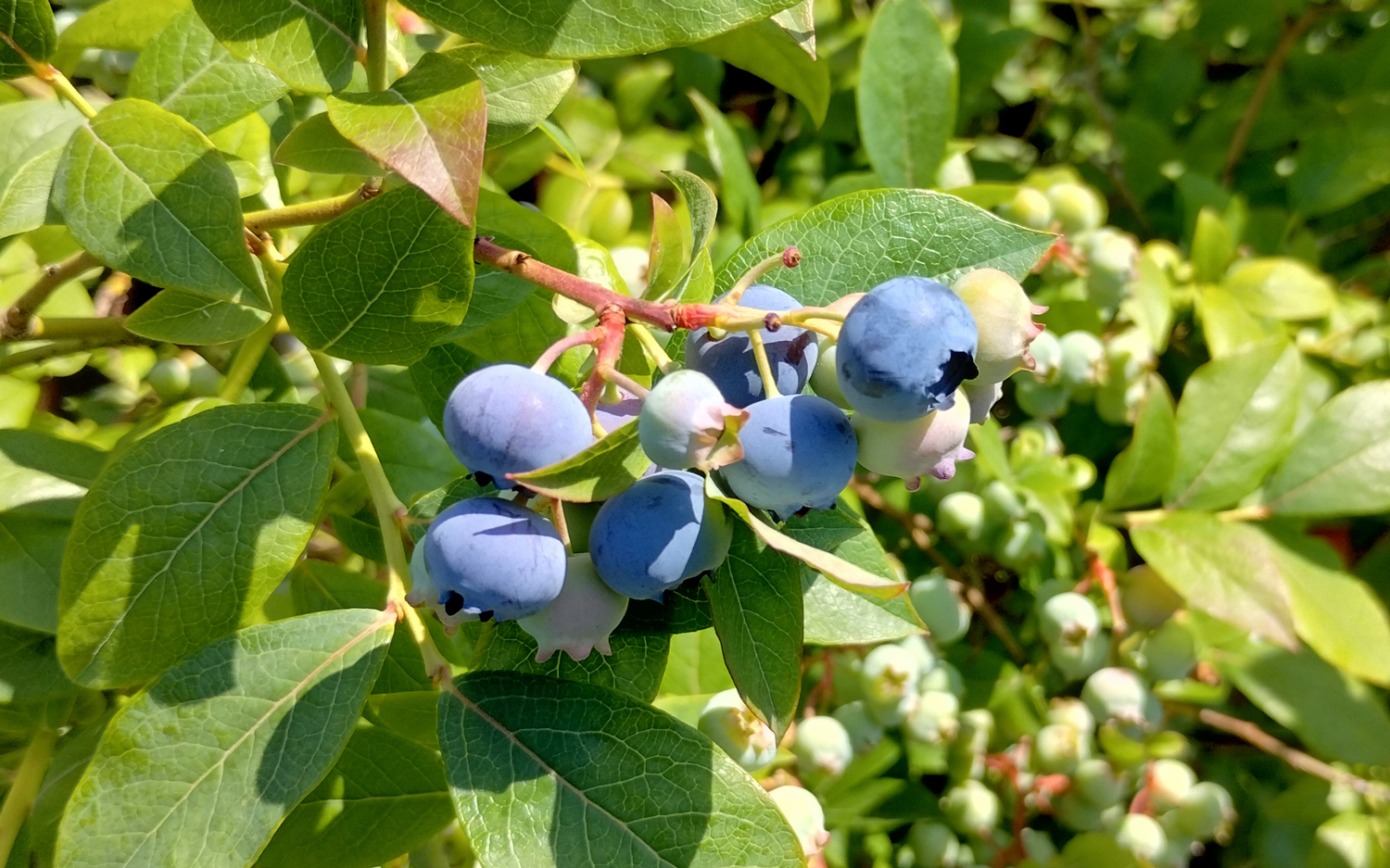
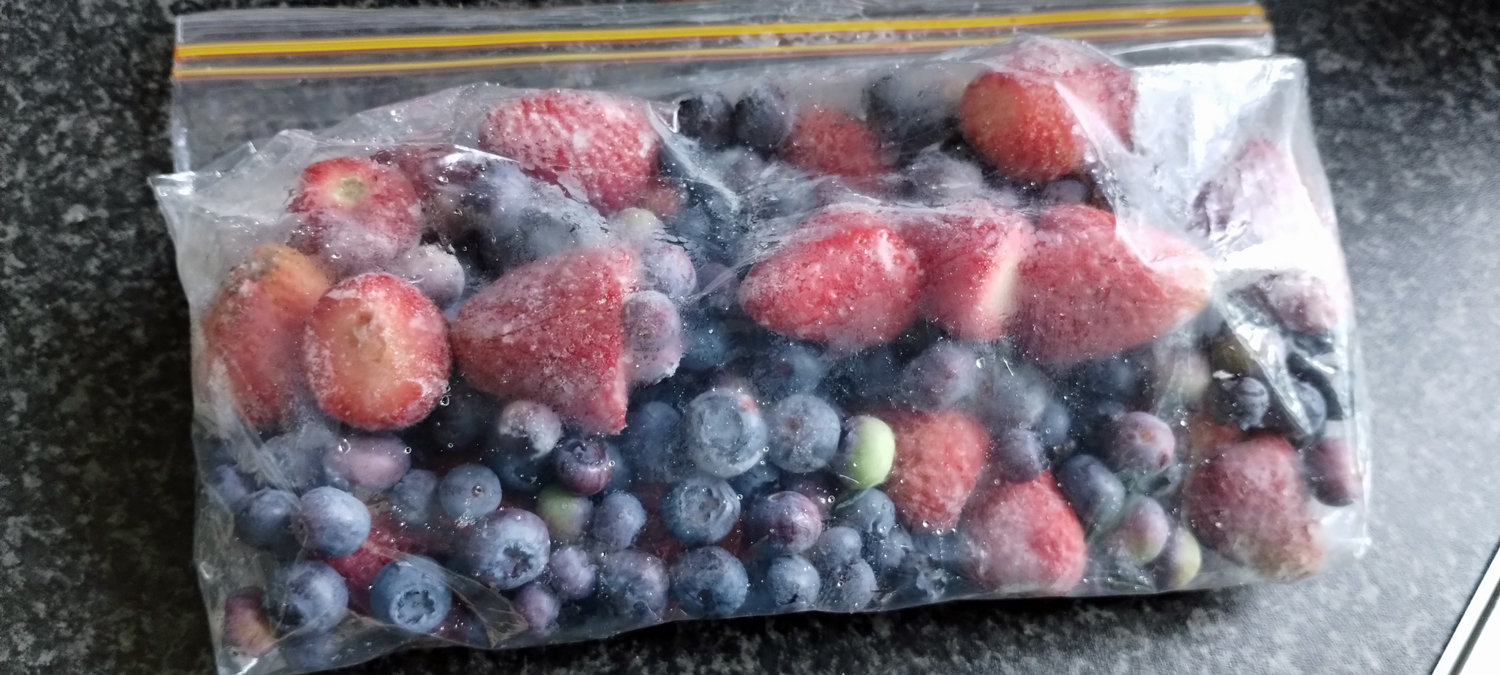
Meanwhile, there are several fruit plants on the go: strawberries, blueberries, gooseberries and blackberries. The blackbirds seem to have taken to the latter, which is fine because in years past they’ve annihilated the blueberry plants (I don’t mind, honestly. It’s great fun watching their contortions to try and get to the berries while balancing on very delicate branches. And it must be a delicious thirst-quenching treat for them when the weather’s hot). Anyway, all the fruit is being gathered up and frozen until there’s enough to make jam later in the season.
Meanwhile the usual fight goes on against pests: after recent visits by cabbage white butterflies I’ve spotted the first tiny caterpillars moving around the beds. And there are flies of some sort making holes in the iceberg lettuces, so I’m lifting those before they’re fully filled out just so they don’t get completely ruined.
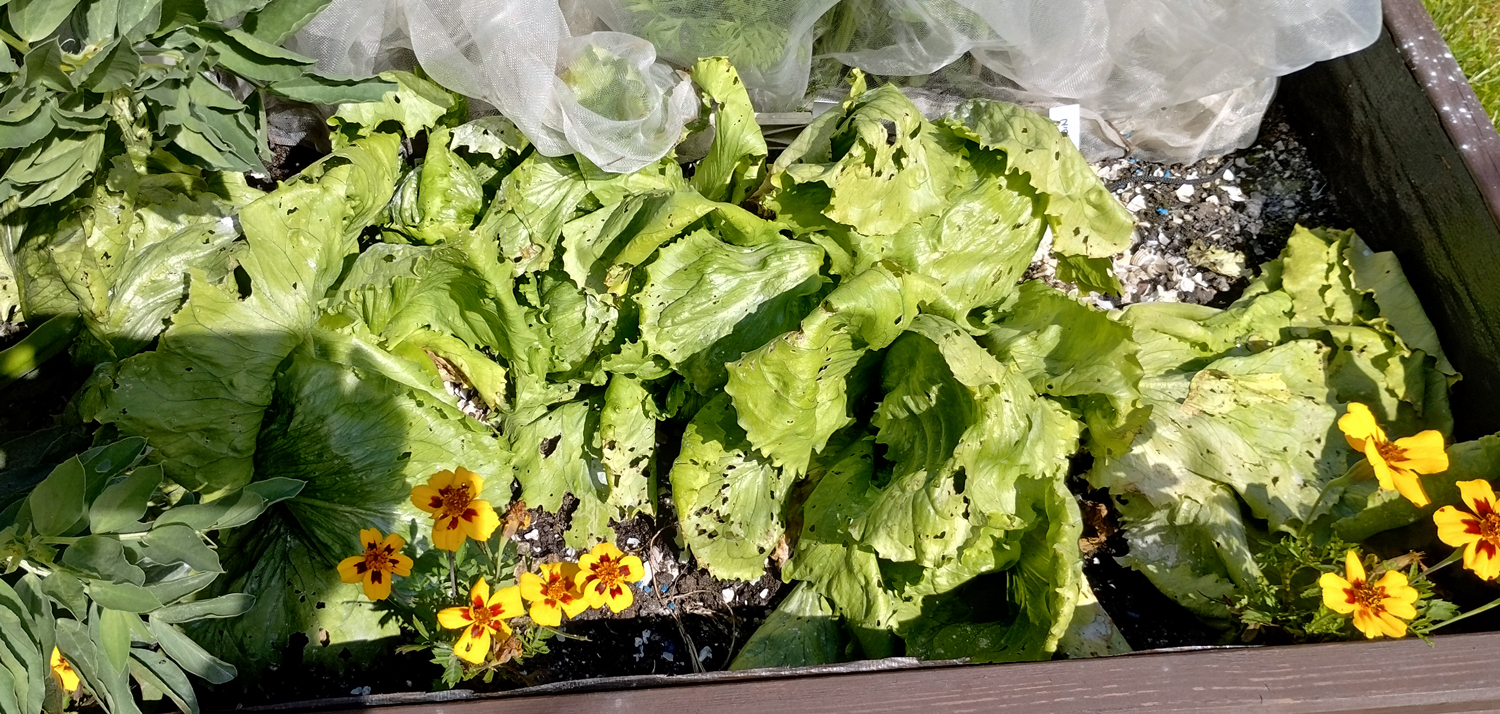
There are also signs of slugs, so I ordered some slug nematodes but good old Yodel the delivery firm still hasn’t delivered them, so they’ll be dead on arrival. I’ll need to get onto the supplier to request a replacement pack – at £30 for 100sqm treatment they’re not cheap. On the upside, there’s a pair of blackbirds and some very welcome new thrushes visiting the garden every day and they’ll be picking up any critters they can snack on.

It’s now peak feeding season as the different vegetables and fruit are producing, so as well as using tomato feed for the tomatoes, I’m using what I think is a really good seaweed-based food for everything else. Apart from the gadget-like novelty of the clever dosing cap at the top of the bottle, this stuff really does seem to make plants grow bigger than when using standard plant food mixes.
It seems to be good for the tent-based plants too: Scotch Bonnet chillis, Apache chillis, Britney sweet peppers and a couple of basil plants. The sweet peppers were a speculative late sow, so are a bit behind schedule, but the Apache chillis have lots of tiny green fruit on them now.
The more heat-needy Scotch Bonnets don’t yet, but there are small flower heads forming now. And tearing fresh basil onto any tomato-based meal or snack is a continual joy.
Thanks for reading. Bye for now.
 www.grow-veg.uk
Courgettes (which I know simply as zucchini) might be as popular as they are more because of their reliability than because they are particularly good. I prefer other squash, but grow zucchini because I know it will always provide while the other squash are between production. At the end of the season, we let the last fruit grow huge, like a winter squash. It lasts like a winter squash, but tastes like the smell of grass clippings.
LikeLiked by 1 person
Thanks Tony. Good points. And I like that idea about letting the last ones grow big.
LikeLiked by 1 person
Well, it is only good if it will actually get eaten. Some of us are so tired of zucchini by then that we are tempted to leave the last big one for squirrels.
LikeLiked by 1 person